Last Chance to Enter: September 18th! | Enter Now
Juror Spotlight
Mohammad Shahhosseini,
Manager, Video Production and Motion Graphics,
Environmental Defense Fund
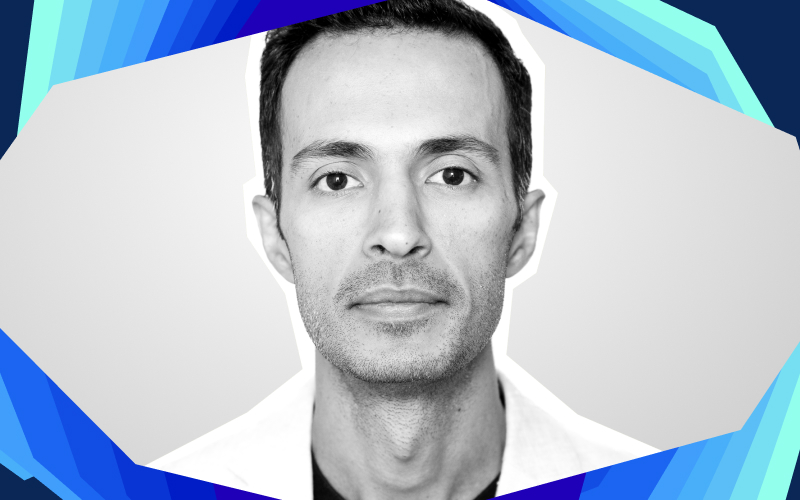
Mohammad is Manager of Video Production and Motion Graphics at the Environmental Defense Fund. He’s a filmmaker with a sociologist’s curiosity, turning stories about people, place, and the environment into award-winning films. Keep reading to find out why he believes the most personal stories are often the ones that stick with people the most.
What was your first job?
My first job right after high school was proofreading for a local magazine. The target audience was younger people, and the magazine featured articles on culture, art, cinema, literature, photo essays, and more.
I think that was my entrance into the world of creativity and the arts. A few months after starting college, I got into photography, and over the years I explored photojournalism, video production, and documentary filmmaking. During that summer job, I also became friends with a guy who is still one of my closest friends decades later. We eventually co-founded a small media production company together.
That’s how everything unfolded. One chance led to another, and here I am. It’s interesting how a tiny summer job could turn into a career. You never know what lies ahead.
What’s one thing you wish you knew when you first started your career?
There is a monologue by Ira Glass that I came across a couple of years ago, and I wish I had found it much earlier in my career. What he says has really stuck with me.
Basically, he says that many of us get into creative work because we have good taste. We know what good work looks like. But there is a gap between our taste and our ability. In the first few years, the work we make often doesn’t live up to our expectations, and we can feel that. The only way through it is to keep working, put yourself on deadlines, produce a high volume of work, and keep creating until the bad work works its way out of your system and the good work starts to show up.
I wish I had come across that advice in my early twenties. I think I would have done a lot more work and worried a lot less about whether it was good enough.
For those who would like to listen to the original monologue, just Google: The Gap by Ira Glass.
If you weren’t working in this industry, what would you see yourself doing?
Probably sociology? I’ve always been fascinated by people, communities, and human behavior. In many ways, filmmaking and documentary storytelling have been my way of exploring those interests.
That said, I could also see myself doing something outdoors. Gardening, farming, or anything that lets me spend more time in nature.
How has your definition of “great creative work” changed in the last few years?
A few years ago, I probably would have defined great creative work by its craftsmanship: beautiful cinematography, strong editing, impressive visuals, and technical execution.
Today, I still value all of those things, but I think more about impact. Great creative work is work that makes people feel something and think differently. Sometimes a simple story with a clear message can be more powerful than the most technically perfect piece.
Over time, I’ve also come to appreciate authenticity. The work that stays with me is often not the loudest. It’s the work that feels honest and human.
One quote I always come back to is: “The more personal, the more universal.”
Don’t miss your last chance to prove your small team’s work is a scene-stealer. Finish your entries by this Friday, September 25th!