2026 Winners Announced! | See the Winners in the Gallery→
Juror Spotlight
Lauren Patterson,Co-Founder & CEO,That Random Agency
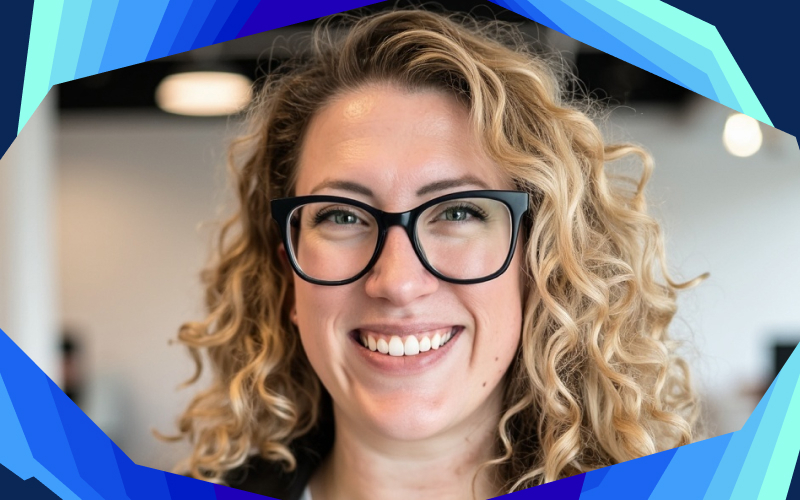
What happens when a food truck stops being fun? For Juror Lauren Patterson, you shut it down, no matter how many event contracts you have to cancel. That instinct to know when to pivot carries into her work as Co-Founder and CEO of That Random Agency, a 12-person shop she and her husband built from freelance work into a team serving clients like Comerica, BorgWarner, and Mazda. Read on to see why Lauren looks past the polish and straight at the constraints when she’s reviewing Davey entries.
What does a typical day look like for you?
Honestly, there isn’t one, and I’ve stopped pretending otherwise. A morning might start with a client strategy call, then a 1:1 with someone on my team about their growth, then an hour heads-down writing a proposal, then daycare pickup. My husband John and I co-founded the agency, so the line between work talk and dinner talk is blurrier than it probably should be. But it’s safe to say that every day I’m either making something, helping someone on my team make something better, or figuring out where we’re headed next. That, and a lot of iced vanilla lattes.
Do you have any brainstorming rituals? What are they?
My best ideas show up after my toddlers are finally down and the house goes quiet. I do a brain dump into my notes app almost every night, then look at it the next day with fresh eyes. I’m also notorious for screenshotting every spark of an idea that hits during the day. My camera roll folder is a disaster I’m too scared to open.
When did you know that this career was what you wanted to do?
I had seven internships in college because I had no clue what I wanted to do (overachiever, clearly). I landed in social analytics and got hooked on the mix of strategy, creativity, and the immediate feedback you just don’t get in other marketing channels. You post something and the audience tells you right away if it’s any good. Social’s changed so much since then that I now think of myself as being in the business of making people and brands findable, across social, search, and AI.
What was the biggest pivot you had to make when working on a project?
The biggest one wasn’t a client project, it was a food truck my husband John and I started, Sly Fox Pizza. The whole point was fun, a way to be part of the community and make something with our bare hands. Then ingredient costs shot up, the margins were razor thin, and the prep ate all of our limited free time. I came out of it with so much respect for people in the food industry, because that work is genuinely grueling. Eventually we looked at it and realized the thing we started for fun had stopped being fun. So we wound it down, which meant canceling event contracts we’d committed to and there’s no clean way to do that. But walking away from something you built isn’t failing at it. Sometimes the smartest pivot is admitting why you started, seeing that reason is gone, and turning before it costs you more than it should.
What’s one thing you wish you knew when you first started your career?
That different isn’t wrong. We’re taught the path to success is linear, that you pick a lane and climb, and that pivoting means you failed at the first thing. But doing all the right things doesn’t always work out the way you pictured, and sometimes it lands you somewhere you don’t even like. There’s no single right way to solve a problem or build a business. I wish I’d trusted that sooner instead of assuming the people who looked certain had it figured out.
How do you stay up-to-date with industry trends?
I’m chronically online, honestly. But I also treat it like actual work, not just scrolling. I block time every week to keep up, because in this business the minute you stop paying attention is the minute you’re behind. I’m in Slack communities, I read constantly, and a lot of it is just watching how brands and people behave on social and in AI tools before it shows up in any trend report.
What new territory of media, design or marketing are you interested in getting into?
Community management. Everyone’s racing to generate more content, but the more of that there is, the more a real community becomes the thing you can’t fake. That’s going to be how people know who to trust. I’m really curious to see the community manager job turn into something way more strategic than people treat it as right now.
In an ever-changing digital landscape, what aspects of a project leave a lasting impression?
The people. The deliverables come and go, but years later what I actually remember are the clients, the agency partners, and the team members I got to work alongside. I feel genuinely lucky for that. You can pour everything into a project and a year on you’ll half-remember the work, but you’ll remember who was in the room with you, who took a chance on you, who made the long nights worth it. That’s the part that lasts.
Do you have any tips for entrants on how to prepare an award-winning entry?
Be yourself, and don’t write what you think a judge wants to hear. They can smell a performance from the first line. Just tell me about the actual project. What was hard about it? What are you genuinely proud of? The entries that win aren’t the ones stuffed with buzzwords and inflated numbers, they’re the ones where you can feel a real person who cared about the work. Write it like you’re telling a friend what you pulled off, not like you’re filling out a form.
How has your definition of “great creative work” changed in the last few years?
A few years ago, great work could mean polished. Well-produced, looked expensive, technically clean. That bar doesn’t hold up anymore. AI couldn’t generate a decent caption a few years ago. Now it can generate a thousand. So polish stopped being proof of anything. What I call great now is whatever can’t be generated, a real point of view, a brand that actually sounds like a person, a reason to exist beyond filling a feed. The craft moved from how it looks to whether there’s a human in there at all.
What’s the first thing you look at when you view an entry?
The constraints. What were they working with? I’m always more impressed by a sharp result on a tiny budget than a glossy one with real money behind it. Anyone can make something look good with a big check. Show me the team that hit 1,212% growth with zero paid media and I’m paying attention. Scrappy beats expensive every time, because constraints are where the real creativity lives.
There are only three days left to put your best work in front of Lauren and other expert Jurors by this Friday, September 18th. Don’t miss your last chance to prove your small shop has no limits!